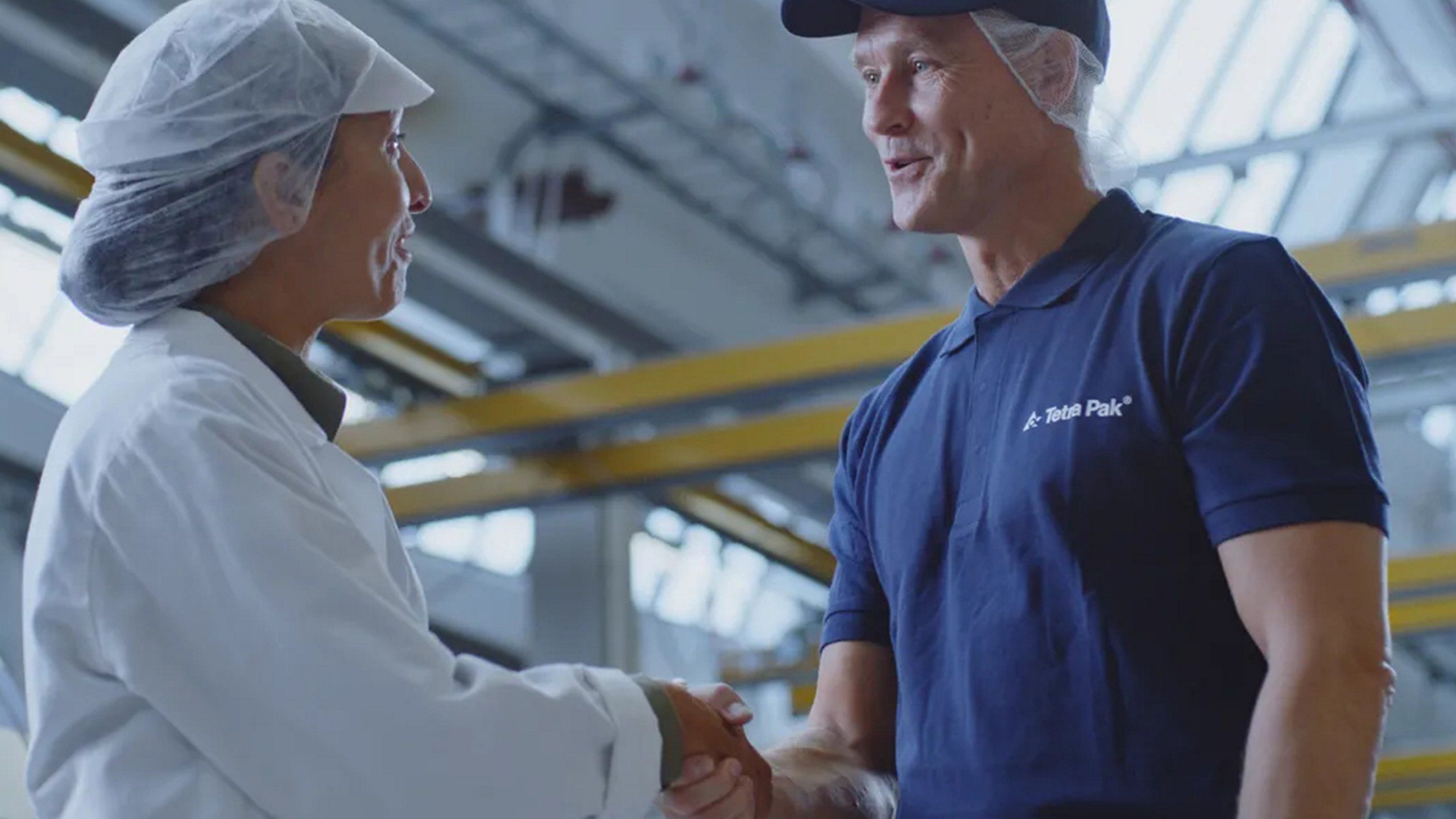
Tetra Pak® has grown from a small family business into one of the world's leading suppliers of processing and packaging solutions for the food and beverage industry. With a wide range of equipment for processing, filling, and packaging, the company offers solutions for many different manufacturing processes.
At Schneider Industries, we support companies in finding the right Tetra Pak® machine for their specific production needs. Whether you are processing liquids, dairy products, or other food products, we help you identify the most suitable equipment for your production environment.
Tetra Pak®: Aseptic packaging for consistent product quality
One of the key advantages of Tetra Pak® solutions is their advanced aseptic packaging technology. Through a multi-layer construction and protective barrier, cartons can safely preserve food products for long periods without refrigeration. This packaging technology helps manufacturers maintain consistent product quality while protecting sensitive products such as milk, vegetables, soups, and fruit juices. By using carefully designed materials and packaging systems, the products are securely sealed and protected from external contamination.
As a result, aseptic packaging has become a standard solution across the global food and beverage market, especially for companies that produce packaged liquids and shelf-stable food products.
Tetra Pak® Prices and cost factors
The costs of Tetra Pak® equipment can vary significantly depending on several factors. These include the specific machine model, production capacity, condition of the equipment, and additional services required for installation or customization.
Because of these variables, providing a fixed Tetra Pak® price list is often difficult. Instead, interested companies can simply select a suitable machine and send us a non-binding inquiry. Our team will then review the request and provide the best available option based on the machine type, production requirements, and current market availability. This approach ensures that customers receive solutions that offer the best possible value for their production setup.
Schneider Industries: Tetra Pak® equipment and spare parts supplier
Through our cooperation with Tetra Pak®, Schneider Industries has access to new components and spare parts that help optimize production systems. Our cooperation with one of the most established suppliers in the food processing industry enables us to offer reliable solutions, shorter delivery times, and comprehensive technical support. Through access to Tetra Pak® components and equipment, we support advanced process and packaging solutions that are specifically designed for the food and beverage industry and support efficient manufacturing processes.
Comprehensive support for your production equipment
Schneider Industries does more than simply supply machinery. We support companies throughout the entire process – from selecting the right machine to installation and commissioning. With our own fleet, we ensure efficient and secure transport by land, sea, or air. Our services also include dismantling, removal, and temporary storage of existing equipment in our 12,000 sqm facility in Magdeburg, Germany.
After delivery, we support our customers with customization, assembly, and commissioning to ensure that the new machine can be seamlessly integrated into the existing production line.
Our services at Schneider Industries:
- Spare parts & maintenance: Through our partnership with Tetra Pak®, we can supply new spare parts and support maintenance processes to keep production systems running smoothly.
- Customization to customer requirements: We help adapt machinery and packaging solutions to your factory layout, production capacity, and product requirements.
- Process analysis & consulting: Our experts support companies in project planning, machine installation, and production optimization to determine the most efficient solutions.
- Long-term partnership: With more than 30 years of industry experience, Schneider Industries focuses on building long-term relationships and delivering sustainable value to our customers.
If you are looking for reliable Tetra Pak® solutions or want to learn more about available machines and pricing, contact Schneider Industries today for a non-binding inquiry.
What are the drawbacks of Tetra Pak®?
While Tetra Pak® packaging offers many advantages for food and beverage manufacturers, there are also a few potential drawbacks to consider.
One challenge is the multi-layer structure used in aseptic packaging, which combines materials such as paperboard, aluminum, and plastic. While this design protects products and extends shelf life, it can make recycling more complex compared to single-material packaging types. Specialized recycling facilities are often required to separate the different layers. Another factor is the initial investment and operating costs of the processing and filling equipment. For companies entering aseptic packaging for the first time, machines and production lines can represent a significant investment.
However, many manufacturers still choose Tetra Pak® solutions because they offer strong product protection, long shelf life for liquids such as milk or juice, and efficient large-scale manufacturing.
What are the 6 layers of Tetra Pak®?
A classic Tetra Pak® (beverage carton) consists of six functional layers made of plastic (polyethylene), cardboard, and aluminum. These layers protect the contents from moisture, light, and oxygen. The layers are usually structured as follows, from the outside in:
- Polyethylene (outer layer): Protects against external moisture.
- Cardboard (paper): Provides stability and shape.
- Polyethylene (adhesive layer): Bonds the cardboard to the aluminum foil.
- Aluminum foil: Protects against oxygen and light (keeps the product fresh for a long time).
- Polyethylene (inner layer): An adhesive layer that bonds the aluminum to the innermost layer.
- Polyethylene (innermost layer): Seals the product, keeps liquids in, and prevents contact with the aluminum layer.
Composition: On average, a Tetra Pak® consists of approximately 70–75% cardboard, 20–25% polyethylene, and 4–5% aluminum.
Which is better, Tetra Pak® or plastic bottles?
Whether Tetra Pak® cartons or plastic bottles are the better option depends largely on the product, distribution requirements, and sustainability goals of a company.
Tetra Pak® packaging is widely used for liquids such as milk, plant-based drinks, and fruit juices because aseptic packaging allows products to be stored for long periods without refrigeration. The carton-based structure also uses a high proportion of renewable materials and is lightweight for transportation.
Plastic bottles, on the other hand, are often used for products that require resealable packaging or high transparency, such as water or soft drinks. They can also be easier to recycle in some markets because they are usually made from a single material.
Many food and beverage companies choose Tetra Pak® cartons when long shelf life, efficient logistics, and protection of sensitive products are key priorities. Schneider Industries supports manufacturers in selecting the right processing and packaging equipment for their production requirements.
What exactly is Tetra Pak® packaging?
Tetra Pak® packaging is a type of aseptic packaging system designed to safely pack and preserve food and beverage products for extended periods.
The packaging typically consists of multiple layers of paperboard, plastic, and aluminum that create a protective barrier against light, oxygen, and bacteria. This structure helps maintain consistent product quality while extending the shelf life of products such as milk, soups, sauces, and fruit juices.
The cartons are filled using specialized processing and filling machines that sterilize both the packaging material and the product before sealing. This process allows manufacturers to package liquids and other food products without the need for refrigeration during storage or transportation.
Require any services from us?
Feel free to call us
Monday through Friday
8:00 AM to 5:00 PM CET